
Responder System
No More Room in Hell 2 Characters Explained
No more room in hell 2 characters are custom CRC Responders, not fixed heroes; each has a background, Skill, level, loadout, appearance, and death risk.
 Official 1.0 Launch Trailer
Watch the Armageddon launch overview.
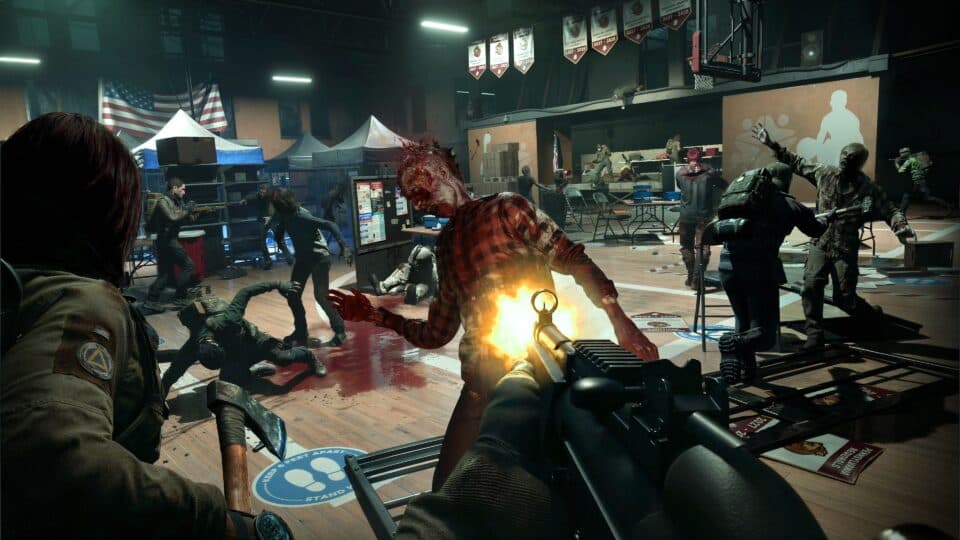
Watch on YouTubeNo More Room in Hell 2 does not use a fixed roster of named hero characters. Players control customizable Civil Recovery Corps Responders, each with a short background, starting Skill, individual level, loadout, appearance, and permanent-death risk. The campsite supports three active Responder slots.
Who the Responders are
Responders are volunteers who joined the Civil Recovery Corps during the NPV health crisis to fill understaffed jobs. When the dead began to rise, those volunteers were pushed into outbreak missions. Their identity comes from background, Skills, equipment, appearance, and what survives each extraction.
The official material does not provide a canonical party of named protagonists. A page that invents a hero tier list would misrepresent the system. Specific current candidate names or background text not included in the research are 待确认.
This structure supports player-created stories rather than a traditional character campaign. A Responder becomes valuable through successful missions and choices. Permanent death gives that personal development a real risk.
Three active roster slots
The campsite holds three active Responder slots. Selecting an empty slot presents three candidates. Credits can reroll the candidate group, and the selected character locks when matchmaking begins.
Each slot maintains its own character level, Skills, loadout, appearance, and exposure to permanent loss. The player is therefore building a small roster rather than one account-wide avatar. Different Responders can be prepared for different modes or difficulty levels.
The exact current reroll price and candidate distribution are 待确认 because launch tuning can change economy values. Do not copy an old Credit cost without its version. The official 1.0 rule that candidate groups can be rerolled remains the supported fact.
Backgrounds and starting Skills
Every candidate has a short background and a starting Skill based on past experience. Career background therefore shapes early specialization. It does not create a fixed named class with an immutable ability tree in the supplied material.
Armageddon added Handgun Reloading, Rifle Reloading, and Shotgun Reloading Skills. Averaging, Guts, and Teddy Bear were removed. Skilled Medic supports team healing, while Scavenger affects ammunition pickups and inventory calculations.
Skill reroll prices were lowered for 1.0 to support buildcrafting. Credits can also upgrade Skills to Expert level. Exact current Skill values, probabilities, and prices are 待确认 unless verified in the live build.
Character XP and successful extraction
Successful final extraction awards Character XP. Early extraction preserves a Responder but gives no Character XP and only a small portion of Credits under the 1.0 description. Final rewards also depend on supplies collected by the team.
This creates a tradeoff between growth and survival. A developed character may leave early when infection or squad collapse makes the final route too dangerous. A fresh character may accept more risk, but a full loss still removes that slot’s progress.
Ordinary carried loot does not become a permanent stash in the same way as a conventional extraction shooter. Supplies convert into progression resources. Sharing ammunition and treatment during the mission can therefore improve the squad’s chance of preserving every character.
Account progression and Credits
Account Level unlocks broader access to gear and Skills. Credits can buy or improve loadout equipment, upgrade Skills, pay for rerolls, and purchase cosmetics. Loadout items no longer require Character Level under the 1.0 economy.
That change lets a player invest resources in either a fresh recruit or an experienced survivor. It also separates account access from character survival. Losing one Responder does not mean every account unlock disappears, although character-specific investment can be lost.
The current economy should be checked after hotfixes. Official examples show that weapon, grenade, and Revive Syringe prices changed before or around launch. Exact present prices are 待确认.
Merits and weekly assignments
Merits are earned through weekly Assignments and can purchase selected cosmetics or a Rescue Beacon. Four assignments are available each Tuesday cycle, three award one Merit plus Credits, and the larger weekly goal awards three Merits. The objectives rotate, so the live set is 待确认.
The Rescue Beacon protects one equipped Responder from the next qualifying permanent loss. It consumes one loadout slot and is spent when triggered. It can be purchased with Credits or Merits under the 1.0 rules.
Using a Beacon is a roster decision. A highly developed Hard or Nightmare character may justify the slot, while a practice Responder may carry another utility. The item is insurance, not permanent immunity.
Permadeath by difficulty
Hard and Nightmare expose a Responder to permanent loss from deployment because normal respawning is disabled. Beginner normally returns dead players on a one-minute timer, and Normal respawns after major objectives. Easier settings still have loss boundaries.
A full team wipe before a respawn point can permanently end Responders on Beginner or Normal. Death after extraction has been called can also create permanent loss. A downed teammate may still be revived before that full-death state if the squad can reach them.
Solo Mode removes permadeath but also disables traditional character progression. It is useful for learning a map or testing a build without risking the roster. Those safety rules do not carry into regular co-op.
Character customization
The Broadway update introduced equipment customization for head, torso, legs, and feet along with color swatches. Genesis added preset head, skin tone, hairstyle, hair color, eye color, and voice controls. These options can be changed for active Responders.
Armageddon added more outfits, Compass and Flashlight cosmetic categories, revised pricing and unlock sorting, and the Wright voice set. Cosmetics can be earned with Credits or Merits, while named paid cosmetic packs are also sold separately. Cosmetic ownership should not be described as a gameplay stat bonus without evidence.
The exact live catalog and price of each cosmetic are 待确认. Store packs and in-game unlocks are different acquisition routes. Check the current interface or store listing before publishing a complete catalog.
The 1.0 progression reset
The 1.0 transition removed old Account Levels, Credits, Nightmare Tokens, Responders, loadouts, and non-Early-Access cosmetics under the published reset. Nightmare Tokens became Responder-specific rather than account-wide. This was a release migration, not a recurring seasonal wipe announcement.
Players returning from Early Access should build a current roster rather than search for removed progression. Old character screenshots can show systems no longer active. A future reset schedule is 待确认 because none is established in the supplied material.
The reset also means older candidate, Skill, loadout, and economy guides can be wrong. Always check whether advice names Armageddon 1.0 or a later build. Character value depends on the rules active when the Responder is deployed.
Launch customization issues
The launch build had memory crashes when squads used heavily customized Responders, especially with complex patterns. Hotfix 1.0.3.1 fixed several customization crashes, incorrect patterns, and some server stability problems. It also addressed a crash caused by leaving customization too quickly.
These notes are historical technical context, not permanent limits on character creation. The current status of any later customization bug is 待确认. Use newer official hotfix notes when diagnosing an active problem.
The fix also reset keybindings, so players returning after that hotfix needed to review controls. That side effect is not a character-system rule. It belongs to the specific 1.0.3.1 update context.
Building a practical roster
Use one slot to learn lower difficulties and objective flow. Develop other Responders toward different roles such as medical support, ammunition management, or difficulty-specific survival. The source material supports role-oriented Skills but not a mandatory fixed trio.
Match loadout risk to character value. A developed Hard or Nightmare Responder benefits from revival coverage, infection control, and a Rescue Beacon more than a damage-only inventory. Leave enough capacity to react to mission supplies.
Extract when the expected reward no longer justifies permanent loss. Early extraction sacrifices growth but can preserve the character. The best roster is the one that survives enough final extractions to keep developing.