
Weapons Database
No More Room in Hell 2 Weapons and Loadouts Guide
No more room in hell 2 weapons total 38 in version 1.0; compare firearm calibers, blunt and slashing melee, attachments, noise, ammo, and weight.
 Official 1.0 Launch Trailer
Watch the Armageddon launch overview.
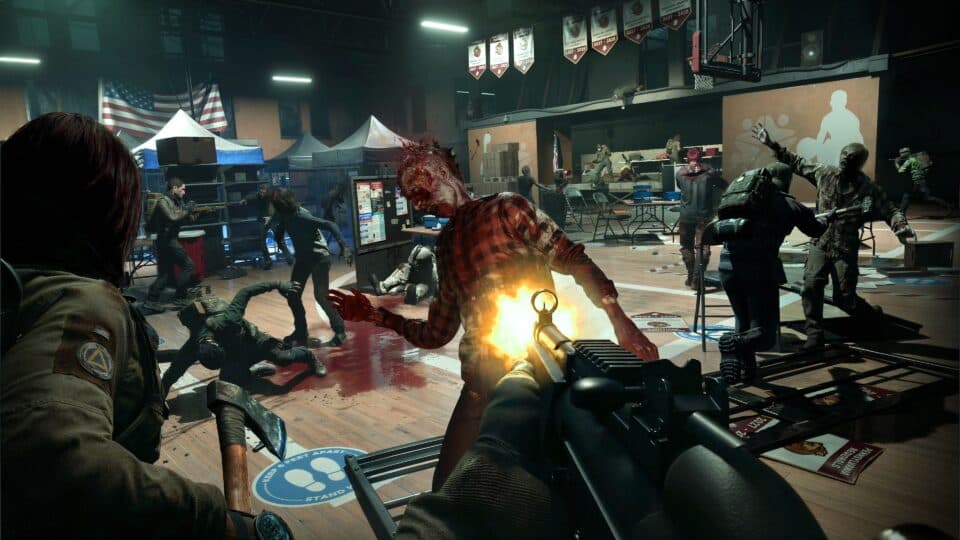
Watch on YouTubeNo More Room in Hell 2 has thirty-eight weapons in version 1.0, but no single weapon is best for every mission. A strong loadout balances melee control, firearm range and penetration, ammunition supply, noise, inventory weight, treatment, and extraction risk. Use ordinary threats to preserve resources, then spend the right tool when the squad must create space.
What the 38-weapon total covers
The official Early Access retrospective reports thirty-eight weapons at Armageddon 1.0. The arsenal includes firearms, one-handed and two-handed melee weapons, blunt and slashing archetypes, explosives, throwable objects, attachments, ammunition types, and utility equipment. The source does not provide a single current in-game database table for every statistic.
The total is a release baseline. New weapons, removals, or balance changes after August 20, 2026 are 待确认. Every tier or price claim should identify the game version.
Weapons appear as map loot and eligible loadout purchases. Higher-tier items are biased toward later mission stages, while difficulty affects how much ammunition can appear inside spawned firearms. Loadout availability and Credit prices changed at 1.0 and during launch-week tuning.
Firearm design in version 1.0
Every firearm was revised around its real-world size and caliber. Larger weapons trade inventory weight and handling for damage and penetration. Smaller weapons are easier to control at intended short ranges but lose effectiveness with distance.
Opening shots have the best accuracy, and aiming down sights matters more than before. Crouching reduces spread. Armor penetration depends on ammunition and the target’s protection.
Suppressors reduce zombie perception rather than making a shot magically silent. Optics improve follow-up accuracy and can extend a firearm’s practical role. Ammo is heavier and difficult to hoard, so a melee backup is essential.
Known firearm list
Official updates name Model 13, M9A3, M1911, Gruber Mk VII, Gruber 922, Gruber Ranch, MP5, M7A1, MC-15, M14 Battle Rifle, Hunter 85, Rochester 1873, 590A1, Fierra DB12, and X12 Super. These are verified examples from the supplied official material. The research does not attach a complete current statistic sheet to every name.
The Gruber Mk VII is a low-recoil .22 sidearm with muzzle and sight attachment slots. The Gruber 922 is a .22 rifle with a twenty-five-round magazine, low recoil, and support for all attachment types. Their current prices and tiers after launch tuning are 待确认.
Revelation strengthened firearm identities through caliber, spread, recoil, effective range, falloff, stability damage, and penetration. A list that ranks only displayed damage ignores those systems. Handling and ammunition availability can determine whether a weapon remains useful through extraction.
Blunt melee weapons
Blunt weapons focus on stability damage, knocking zombies down, and creating safer control openings. A knockdown can give the squad time to move, revive, or complete an objective interaction. It is often more valuable than chasing one extra damage number.
Known blunt or improvised examples include Mallet, Tire Iron, Small Wrench, Large Wrench, Long Pipe, Baseball Bat, Rebar, Hockey Stick, Shovel, Sledgehammer, and Crowbar. Some tools can occupy different practical roles depending on speed, reach, and attack choice. Exact live classifications for every improvised item are 待确认.
Baseball Bat and Sledgehammer both provide strong stability pressure but differ in speed, base damage, reach, and commitment. Armageddon replaced the Small Pipe with the Mallet in the default inventory and moved several melee weapons between tiers. Old starter-loadout guides can therefore be wrong.
Slashing melee weapons
Slashing weapons trade some stability focus for direct damage and limb removal. Dismemberment can interrupt a threat and reduce its ability to attack. The player still needs enough space to complete the chosen swing.
Known examples include Small Knife, Cleaver, Hatchet, Machete, Tree Trimmer, and Fire Axe. The Small Knife swings quickly but requires dangerous close range. The Hatchet favors heavier attacks and limb removal, while the Machete supports faster combo-oriented slashing.
Quick, Strong, and Charged attacks have separate values. One-handed weapons favor speed and flexibility, while two-handed weapons favor reach and impact with heavier commitment. Repeat attacks should match the current space rather than a fixed combo.
Other known melee items
Official updates also identify Small Pipe in older contexts, Large Pipe or Long Pipe naming, and various improvised tools in the live loot pool. Armageddon moved several weapons between tiers. A name appearing in an older update does not guarantee the same current availability.
Ground-looted higher tiers are intended to feel like meaningful upgrades during a run. That encourages players to leave some inventory flexibility rather than deploying with every slot filled. Exact spawn rates and guaranteed locations are 待确认.
Broadway added the ability to throw many carried melee weapons and objects. Throwing can create a ranged interaction but also separates the player from the tool. Current damage and recovery behavior for every throwable item are 待确认.
Explosives and distractions
Molotov Cocktails create an area of fire, block an entrance, and protect a rescue route. Genesis added them to loadouts at Account Level 16 under that update’s economy, and they also appear as map loot. The current unlock level or price after 1.0 tuning is 待确认.
Frag Grenades, Pipe Bombs, Proximity IEDs, radios, fuel hazards, and environmental explosives provide crowd control or distraction. They can also injure the user, obstruct teammates, and create noise. Placement and communication matter more than raw damage.
Do not use every area-control item in the first contact. Objective holds, teammate rescues, and extraction can create greater need later. A strong build preserves at least one answer for a route that closes unexpectedly.
Attachments and practical range
Suppressors reduce zombie perception and add stealth value. They do not erase all attention or remove the need to choose shots. A suppressed weapon can still consume scarce ammunition and inventory weight.
Optics improve accurate follow-up shots and can extend practical range. Their value rises on weapons whose recoil, stability, and intended distance support careful fire. An optic does not convert every short-range firearm into a long-range solution.
Attachment availability varies by weapon. The Gruber Mk VII supports muzzle and sight slots, while the Gruber 922 supports all attachment types in its documented description. A complete live compatibility matrix is 待确认.
Ammunition, noise, and inventory weight
Large calibers offer damage and penetration but add recoil and inventory cost. Ammunition is deliberately difficult to hoard. A player carrying several firearm families can fill capacity with incompatible rounds.
Choose one firearm the current mission can feed. Share ammunition with the teammate whose weapon can use it, and unload found weapons when the live game permits. Hoarding every magazine can leave no room for infection treatment or critical supplies.
Noise can attract more zombies than the shot removes. Use melee or avoidance for routine slow threats and save firearms for runners, specials, armored enemies, or a teammate who cannot disengage. The objective, not the kill count, decides when combat has achieved its purpose.
Loadout priorities by difficulty
Beginner is for controls, objectives, and weapon handling. Use affordable gear, leave capacity for found upgrades, and learn how attack commitments feel. A high-cost build is not required to understand the route.
Normal supports regular progression and objective-based respawns. Balance melee, firearm, treatment, and utility. Hard disables normal respawning, making medical coverage, rescue tools, and an extraction plan essential.
Nightmare combines no respawn, scarce resources, and greater special-zombie pressure. Coordinate roles and noise across the squad. A Rescue Beacon can protect one qualifying loss but occupies a slot that could hold another tool.
A practical weapon checklist
Choose a melee weapon that handles routine enemies without ammunition. Carry one firearm whose rounds the squad can realistically find. Leave space for medicine, Phalanx, revival support, or mission supplies.
Do not stack multiple heavy weapons without a defined squad role. Compare range, recoil, penetration, noise, and weight rather than damage alone. Preserve explosives for situations where area control changes the outcome.
Show the version on every best-weapon or meta page. Recheck prices, tier placement, Skill interactions, and availability after hotfixes. If an exact value is missing from current official material, mark it 待确认.