
Version 1.0 Meta
No More Room in Hell 2 Meta Builds for 1.0
No more room in hell 2 meta in version 1.0 favors melee economy, selective firearms, medical utility, noise control, and difficulty-specific roles.
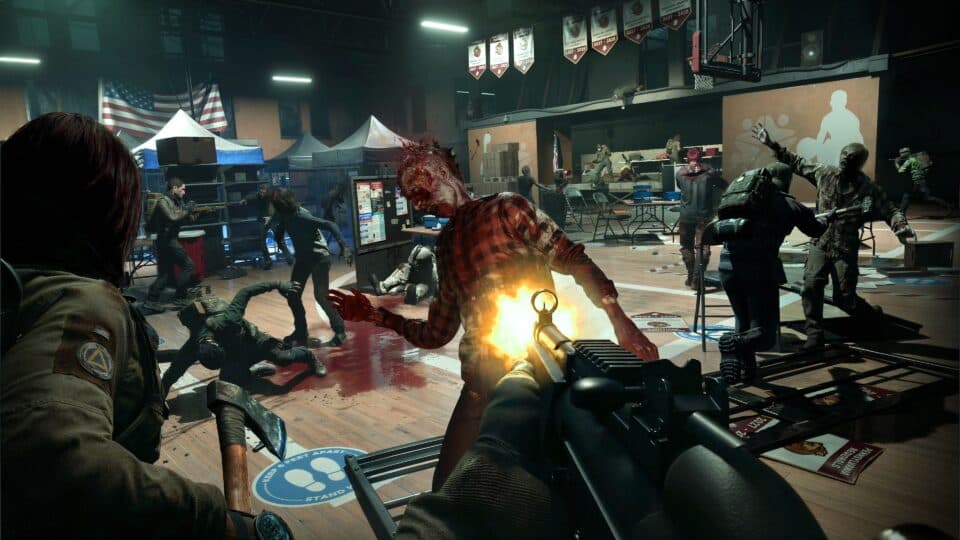 Official 1.0 Launch Trailer
Watch the Armageddon launch overview.
Watch on YouTubeThe version 1.0 meta is a balanced survival plan, not one universal best weapon. Use melee or avoidance for ordinary threats, reserve firearms for armored, distant, or high-pressure enemies, and protect inventory space for healing, infection control, revival, or a Rescue Beacon. Hard and Nightmare make coordinated roles and extraction discipline more valuable than maximum damage alone.
What “meta” means in this game
No More Room in Hell 2 combines combat with inventory weight, noise, infection, extraction, and permanent character loss. A loadout succeeds when it helps the squad complete objectives and leave alive. Kill speed alone does not measure that result.
The right build changes with difficulty, mission mode, character value, and squad composition. Survival speaker defenses reward prepared crowd control, while long Objective routes reward sustainable ammunition and treatment. Solo practice removes permadeath and traditional progression, changing the risk calculation again.
The exact highest-win-rate build is 待确认 because the supplied sources do not publish global loadout statistics. This guide derives principles from documented 1.0 systems rather than inventing a data-backed ranking. Every recommendation keeps its game-version scope visible.
Core loadout principles
Handle routine slow threats with melee or avoidance when the route permits. Shooting every target consumes ammunition and creates noise that can attract more pressure. A firearm should solve a problem worth its weight and attention.
Reserve inventory for at least one medical or infection answer. Phalanx delays infection but does not cure it, while Gene Therapy is the actual cure. Revive tools and support Skills can preserve a teammate before full death.
Keep one exit plan. Molotovs, explosives, knockdowns, and controlled firearm bursts can create movement space, but they should not all be spent during the opening contact. Extraction often becomes the most dangerous part of a successful run.
Blunt and slashing melee
Blunt weapons emphasize stability damage, knockdowns, and crowd-control openings. They help a squad create time for a revive, interaction, or retreat. A Baseball Bat and Sledgehammer both provide strong stability pressure but differ greatly in speed, damage, reach, and commitment.
Slashing weapons emphasize direct damage and limb removal. A Small Knife swings quickly but requires close range, while a Hatchet favors heavier swings and a Machete supports faster combo-oriented slashing. Dismemberment can interrupt threats without providing the same broad knockdown role as blunt impact.
One-handed weapons favor speed and flexibility. Two-handed weapons favor reach and impact but commit the player more heavily. The best choice depends on space, stamina, teammates, and whether the objective requires movement or holding.
Firearms, caliber, and attachments
Firearms were revised around real-world size and caliber. Larger weapons trade inventory weight and handling for damage and penetration. Smaller weapons are easier to control at their intended short range but lose effectiveness at distance.
Opening shots have the best accuracy, aiming down sights matters, and crouching reduces spread. Armor penetration depends on ammunition and protection. Suppressors reduce zombie perception, while optics improve accurate follow-up shots and practical range.
Ammo is heavier and difficult to hoard, so a melee backup remains important. Carry a firearm whose ammunition the squad can realistically support. Two impressive guns with incompatible scarce ammo can be worse than one reliable firearm plus treatment.
Beginner learning build
Beginner reduces effective zombie health by thirty percent, keeps teaching UI visible, and normally respawns dead players every minute. Use affordable equipment to learn objective flow and weapon handling. Do not spend the entire inventory on insurance for a practice run.
A simple build uses one controllable melee weapon, one firearm with available ammunition, and one treatment or utility answer. Leave capacity for supplies found during the mission. Practice the compass, objective text, flashlight management, and avoiding unnecessary contact.
Beginner can still produce permanent loss after a full wipe before a respawn point or death after extraction is called. The setting is safer, not consequence-free. A developed character still deserves an exit plan.
Normal progression build
Normal respawns dead players after major objectives and increases Character XP. A balanced melee, firearm, treatment, and utility setup supports repeated extraction. It is the natural place to develop a Responder without the immediate no-respawn rule of Hard.
Use Skills that match the chosen firearm family or squad role. Handgun Reloading, Rifle Reloading, and Shotgun Reloading were added for 1.0, while Skilled Medic supports team healing and Scavenger affects ammunition pickups and inventory calculations. Exact Skill values are 待确认 without the live build.
Normal still has permanent-loss boundaries. A full wipe or death after extraction is called can remove the character. Do not interpret objective-based respawn as unlimited resurrection.
Hard balanced-survival build
Hard disables normal respawning and increases Account XP, Character XP, and Credits. Every slot should answer more than damage. Healing, revival support, infection control, escape tools, and a Rescue Beacon can preserve more value than a second heavy weapon.
Assign squad roles before deployment. One player can focus on blunt control, another on ranged armor penetration, and another on medical support, while every member retains a basic self-defense option. The official material supports role differentiation but does not mandate a fixed composition.
Control noise and stay close enough for a revive. A downed Responder can still be saved, while full death may become permanent. Extract early if the character’s expected loss outweighs remaining mission rewards.
Nightmare coordinated build
Nightmare disables respawning, increases special-zombie pressure, makes resources scarcer, and provides the highest reward multipliers. Avoidance and route discipline become primary resources. A squad that fires continuously can exhaust itself before the final objective.
Use coordinated weapon coverage rather than duplicate heavy loadouts. Protect treatment, communicate ammunition types, and carry crowd-control tools for forced holds or extraction. A Rescue Beacon can prevent one qualifying loss but occupies a valuable slot and is consumed.
No fixed Nightmare best-in-slot list is established by the supplied data. Current prices, drop rates, and balance after launch tuning are 待确认. The reliable meta is a team plan that respects scarcity and no-respawn consequences.
Survival defense build
Survival provides preparation time and a supply drop before each five-minute speaker defense. Successful waves lead to another drop and a new location. Three successful waves call a helicopter, while two failures open early extraction.
Molotovs and explosives can control an entrance or rescue route, but placement and team communication matter because they can harm users and create noise. Blunt knockdowns can create space around the speaker. Firearms should cover runners, specials, armored threats, and exposed approaches.
Do not build only for the first point. The squad must relocate with enough healing, ammunition, and crowd control for later waves and extraction. Exact point order and loot availability are 待确认 until the match selects them.
Infection-support build
An infection-support role reserves inventory for Phalanx, Gene Therapy decisions, healing, or revival tools. Phalanx provides three doses per bottle in the 1.0 description and delays or resets the infection timer. Gene Therapy takes a blood sample, creates an antivirus after about thirty seconds, cures the Responder, and provides immunity.
Only one Gene Therapy treatment normally spawns in a match. That scarcity makes communication part of the build. A player carrying support tools should stay close enough to deliver them before symptoms progress.
Medical capacity competes with ammunition and explosives. A squad where everyone carries only damage has no answer when infection or a downed state appears. Team survival is the performance metric for this role.
Skills and economy changes
Account Level unlocks broader gear and Skills, while each Responder holds individual growth. Credits buy loadout equipment, Skill upgrades, rerolls, and cosmetics. Merits from weekly assignments can purchase selected cosmetics or a Rescue Beacon.
Pre-launch examples reduced the M9A3 from 2,500 to 1,500 Credits and the DB12 from 1,200 to 600. Frag Grenade rose from 150 to 300, and Revive Syringe rose from 1,200 to 2,500. These are documented economy examples, not guaranteed current prices.
Launch response also restored or repriced Baseball Bat, Long Pipe, Tree Trimmer, Hockey Stick, Rochester 1873, and Satchel availability. Current values are 待确认. A meta page should refresh price efficiency after every economy hotfix.
A practical 1.0 checklist
Choose one melee role and one firearm role that the current ammunition supply can support. Leave inventory for medicine or infection control. Add rescue insurance in proportion to character value and difficulty.
Coordinate noise, range, and crowd control across the squad. Use Solo or Beginner to test handling, then evaluate the build under the intended difficulty. Do not call a successful practice loadout a proven Nightmare meta.
Recheck the current patch notes before spending Credits or Merits. Armageddon and launch hotfixes changed enough values to invalidate old lists. When exact information is absent, mark it 待确认 rather than inventing a ranking.